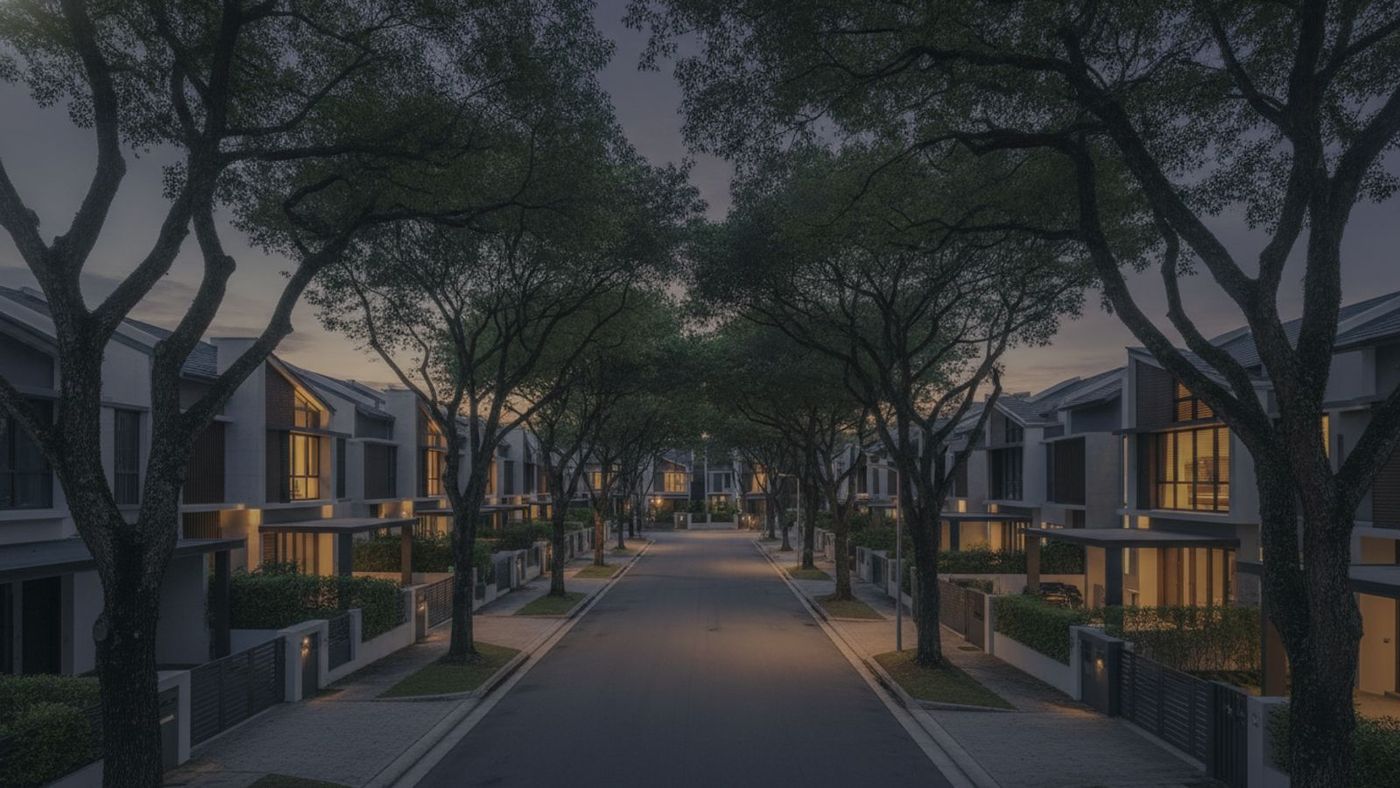
District 11 landed residential street at dusk
LANDED IN D11
Estate guides · District 11

Landed Types Explained

Terrace, corner terrace, semi-detached, detached and cluster houses — what each means for land size, frontage, rebuild potential and value in District 11.

Start here

The five landed types you will see in D11

District 11 landed homes fall into five practical categories. The main differences are how many walls you share, how much land you hold, and how freely you can rebuild. Picking the right type depends on your budget, the street you prefer, and whether you plan to move in, renovate or rebuild.

Quick reference

At a glance: five landed types

Type Typical land size Typical frontage Rebuild potential Best suited to D11 price range
Terrace ~1,200–1,800 sq ft ~15–20 ft Possible within URA plot ratio and setback rules Buyers wanting a D11 entry point or a rebuild project From $X.Xm — indicative placeholder; contact for current comparables
Corner terrace ~1,500–2,200 sq ft ~18–25 ft Better than intermediate terrace; open side allows larger windows or a side garden Rebuilders seeking extra light, side access and a lift well From $X.Xm — indicative placeholder; contact for current comparables
Semi-detached ~2,000–3,500 sq ft ~25–35 ft Strong; 3.5-storey, basement, attic and private lift are possible Condo upgraders wanting space without a detached budget From $X.Xm — indicative placeholder; contact for current comparables
Detached (bungalow) ~3,500–7,000+ sq ft ~35 ft and above Highest flexibility; bespoke design, pool, basement and entertainment spaces Buyers prioritising privacy, land and a custom home From $X.Xm — indicative placeholder; contact for current comparables
Cluster house Varies widely Varies by development Limited or nil; external form usually controlled by the MCST Buyers wanting landed living with condo-style facilities From $X.Xm — indicative placeholder; contact for current comparables

All figures are indicative ranges for District 11 and will vary by street, tenure, plot ratio and land attributes. Verified transaction data is available on request.

Type 01

Terrace houses

A terrace house shares party walls with neighbours on both sides, usually as part of a continuous row. It is the most common landed form in older D11 estates and a frequent starting point for rebuild projects.

Typical D11 profile

Rebuild notes

Rebuilding a terrace is possible up to the applicable URA plot ratio and envelope control guidelines. A rebuild can improve natural light and ceiling height, but side setbacks are constrained by the adjoining units. Many 1970s–1980s terraces in D11 present strong rebuild opportunities.

Indicative D11 range from $X.Xm; request current comparables.

Type 02

Corner terrace houses

A corner terrace sits at the end of a row, with one side open instead of joined to another unit. That open side brings extra windows, natural light and side access, which often makes it more attractive to rebuilders.

Typical D11 profile

  • Land size: ~1,500–2,200 sq ft
  • Frontage: ~18–25 ft
  • Premium over an intermediate terrace; exact premium depends on side setback and orientation

Rebuild notes

Rebuild potential is better than an intermediate terrace because the open side can accommodate larger windows, a side garden or even a private lift well. Buyers should still verify the remaining plot ratio and setback before committing to a design.

Indicative D11 range from $X.Xm; request current comparables.
Type 03

Semi-detached houses

A semi-detached house is attached to one other unit by a common party wall, forming a pair. It offers a middle ground between the compact terrace and the private detached house.

Typical D11 profile

Rebuild notes

The larger footprint allows strong rebuild options — 3.5-storey designs, basement, attic and private lift are all possible under URA landed housing guidelines, subject to Planning Permission. This is why many condo upgraders target semi-Ds for the balance of space and relative affordability versus detached homes.

Indicative D11 range from $X.Xm; request current comparables.
Type 04

Detached houses (bungalows)

A detached house stands alone with no shared walls. It is the most private landed type and typically holds the largest plot, giving the owner the greatest freedom to design around the site.

Typical D11 profile

  • Land size: ~3,500–7,000+ sq ft (Good Class Bungalow plots excluded unless explicitly noted)
  • Frontage: ~35 ft and above
  • Scarce in the core D11 estates; value is highly street-specific

Rebuild notes

Detached houses offer the highest rebuild flexibility within URA envelope control and site coverage rules. Pools, basements, entertainment spaces and fully bespoke architectural designs are all feasible, provided Planning Permission is granted.

Indicative D11 range from $X.Xm; request current comparables.

Type 05

Cluster houses

Cluster houses are strata-landed or strata-titled houses within a gated development, managed by an MCST. They look and feel like landed homes but share facilities and common areas with other owners.

Typical D11 profile

  • Land size and frontage vary widely by development
  • Appeal to buyers wanting landed living with condo-style facilities such as security, pool and gym
  • Important to review by-laws, maintenance fees and permitted works before buying

Rebuild notes

Rebuild potential is usually limited or nil. External form and facade are typically controlled by the MCST, and major alterations require strata approval. Cluster houses suit buyers who value convenience and facilities over full control of the building envelope.

Indicative D11 range from $X.Xm; request current comparables.

Rebuild guide

Rebuild & A&A considerations by type

Not every landed home is a blank canvas. The right strategy — full rebuild or addition & alteration — depends on the type you buy and the rules that govern it.

Full rebuild

Makes sense when the existing structure is dated, the plot is under-built, or you want a bespoke layout. Detached houses have the fewest constraints; semi-Ds are also strong. Terraces are more constrained by side setbacks, and cluster houses generally cannot be rebuilt independently.

A&A (Addition & Alteration)

Often the better choice when the structure is sound and the goal is to add a storey, attic, basement or reconfigure the plan. Intermediate terraces in D11 frequently go the A&A route because both side setbacks are fixed by adjoining units.

URA framework

Every rebuild or major A&A in a Landed Housing Area is governed by URA guidelines and Planning Permission. Height, envelope control, site coverage and setbacks are assessed case by case. Read the URA Landed Housing guidelines or ask me to walk through what applies to a specific plot.

Want a deeper look at the rebuild process? Visit the Brand-New & Rebuild guide or book a site review to check what is possible on a specific D11 street.

Land size and frontage plot diagram
Valuation guide

How type affects value in D11

Landed value in District 11 is not just about the house. The type sets the baseline; the street and plot attributes determine where within that baseline a buyer should price.

  • Land size and frontage — Larger, regular plots with wider frontage command a premium, especially when they allow a generous porch and better light.
  • Tenure — Freehold versus 99-year leasehold changes the long-term value equation, even on the same street.
  • Plot regularity and orientation — Rectangular plots facing the right direction are easier to design and usually trade higher.
  • Street prestige, schools and MRT — Proximity to respected schools, transport and the quietest cul-de-sacs all feed into price per square foot of land.

Price per square foot of land varies significantly by street and transaction date. I do not quote broad “D11 averages” without showing the actual comparables behind them.

FAQ

Questions about D11 landed types

What is the difference between a terrace and a corner terrace?

A terrace is joined to neighbours on both sides along a row. A corner terrace sits at the end of the row, so one side is open. That open side brings more windows, natural light and side access, which usually improves rebuild potential and adds a premium over an intermediate terrace.

Can I rebuild an intermediate terrace house in District 11?

Yes, a full rebuild is possible if the proposal complies with URA Landed Housing Area guidelines, including plot ratio, envelope control, site coverage and setback requirements. Because both sides are attached, side setbacks are constrained, so the design has to work within a narrower envelope. Planning Permission from URA is required before work starts.

Are cluster houses considered landed property?

Physically they are landed houses, but legally they are strata-titled. They are governed by an MCST and the Building Maintenance and Strata Management Act, so owners share common facilities and must follow by-laws. External alterations are usually controlled, so they do not behave like conventional landed property when it comes to rebuilding.

Which landed type usually has the best rebuild potential?

Detached houses generally offer the most rebuild flexibility because they have no shared walls and the largest plots. Semi-detached houses are next, followed by corner terraces. Intermediate terraces are more constrained by side setbacks, and cluster houses usually cannot be rebuilt independently.

How does frontage affect value in D11?

Wider frontage usually means more natural light, a more generous car porch, stronger street presence and greater architectural flexibility. Narrower frontages can limit the layout and parking. Within D11, the exact premium depends on the street, orientation and overall land size.

What should condo upgraders consider when choosing a landed type?

Condo upgraders should weigh privacy against maintenance, the amount of usable land, whether they want facilities such as a pool or gym, and how much rebuild freedom matters. Semi-detached and corner terrace houses are popular middle grounds, while cluster houses suit buyers who want landed space with condo-style amenities.

Next step

Not sure which landed type suits your move?

Tell me your budget, estate preference and timeline. I’ll shortlist D11 streets and property types that match.